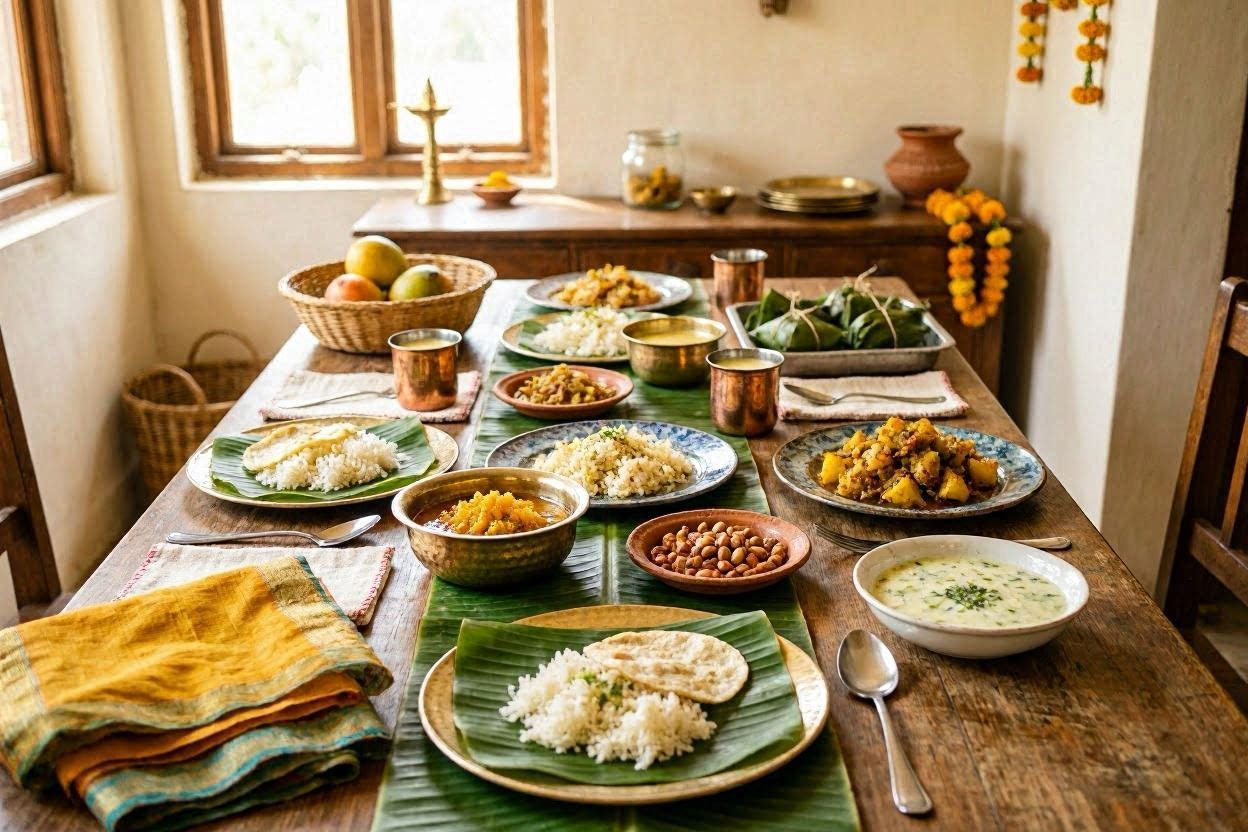
Chaturthi — observed on the fourth day after the wedding in Odia tradition — is one of the most beautiful post-wedding rituals because of its emphasis on the bride's continued relationship with her parental home. The bride and groom visit her parents' home together, the bride spends a day or two there, and her family gets to spend "newlywed time" with the couple as a unit for the first time.
The ritual is grounded in the recognition that marriage doesn't sever family ties — it adds new ones. The Chaturthi visit reassures the bride's parents that they remain part of her life and provides a structured occasion for the groom to be welcomed by his in-laws in a relaxed, family-only setting (in contrast to the formal Vivaha day). A small puja is sometimes performed, and the bride's family typically prepares the groom's favourite foods, gives him a set of new clothes, and applies tilak before the couple departs again for the groom's home.
In coastal Odisha, the Chaturthi often involves the bride's mother specifically presenting the groom with a token gift — a watch, a piece of jewellery, or a small heirloom item — symbolizing the formal acceptance of him into the extended family. In western Odisha, the day sometimes includes traditional Sambalpuri songs and a small community gathering.
Outside of Odisha, similar fourth-day or seventh-day post-wedding visits exist in other Indian traditions (the Pag Phera in Punjabi, the Astamangala in Odia which comes later), but Chaturthi specifically marks the four-day rhythm distinctive to Odia weddings.