Astamangala — literally "the auspicious eight" — is observed on the eighth day after the wedding in Odia tradition. By this point, the newlyweds have settled into the rhythm of married life, and the bride returns to her parental home for a longer visit (typically a few days to a week). The ritual itself is named after the eight auspicious symbols laid out on a brass thali — the kalash, lamp, conch, sankha, mirror, jewellery, garland, and a sweet — which are blessed and presented to the couple by the bride's family.
The Astamangala marks the resolution of any residual tension or homesickness from the wedding sequence. The bride, who has now lived in her marital home for a week, has experienced both her old life and her new one. The eighth day is considered the perfect equilibrium point — auspicious enough for the parents' home to formally receive her, and far enough out that the family-of-marriage rhythm has settled. The groom typically accompanies her and stays for at least a day before returning.
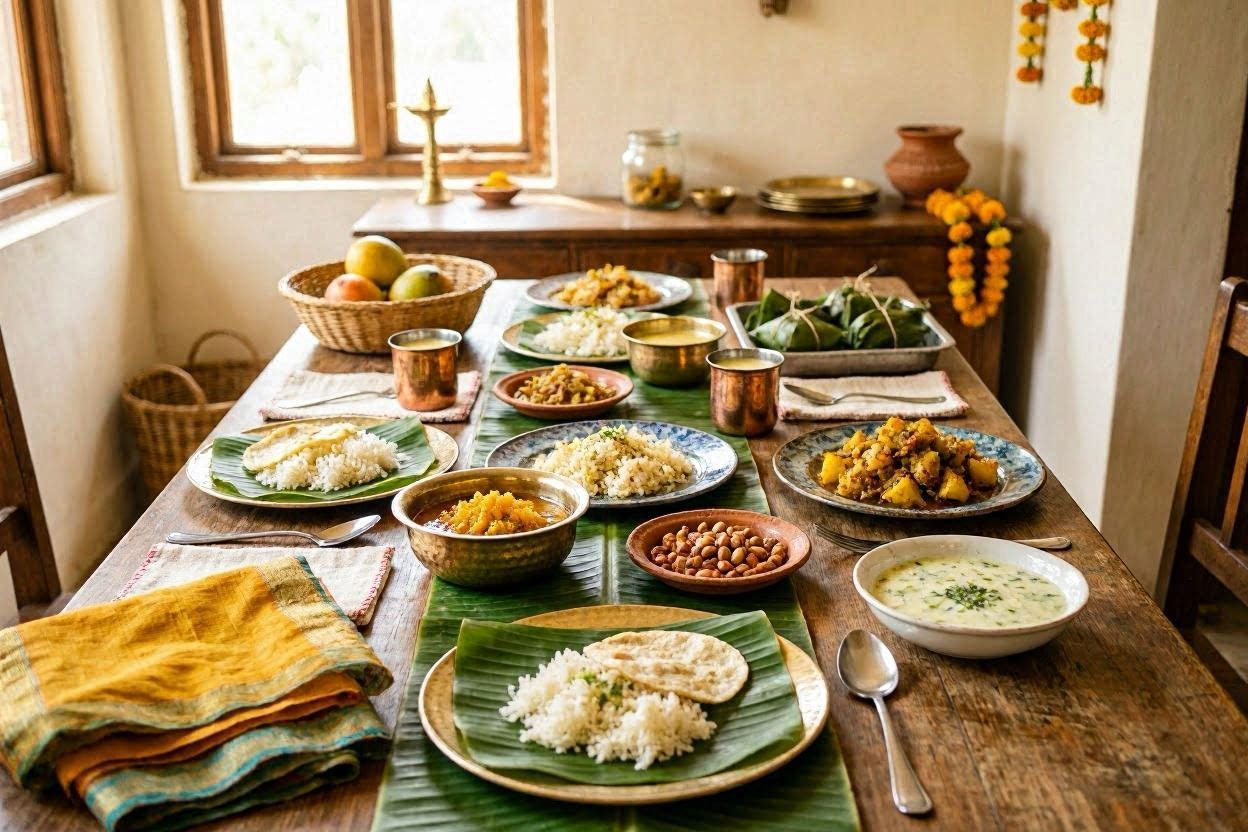
In Bhubaneswar-Cuttack belt families, the Astamangala often includes a small gathering of extended family — uncles, aunts, and cousins from the bride's side — who didn't get one-on-one time with the couple during the wedding chaos. The day is structured around a leisurely lunch, traditional Odia songs, gift exchanges, and the eight-symbol thali blessing.
In coastal Odisha (Puri, Konark), some families perform a small visit to the Jagannath Temple on the Astamangala day if practical — invoking Lord Jagannath's blessing for the couple's new married life. This connects the personal wedding to the broader devotional rhythm of Odia culture.