Bidaai — the bride's farewell — is one of the most emotionally intense moments in any Indian wedding. After all the rituals are complete and the celebration has wound down, the bride departs from her parental home for the first time as a married woman. She traditionally walks backwards out of the home, throwing rice over her shoulders in three handfuls, symbolically returning blessings to the home that raised her.
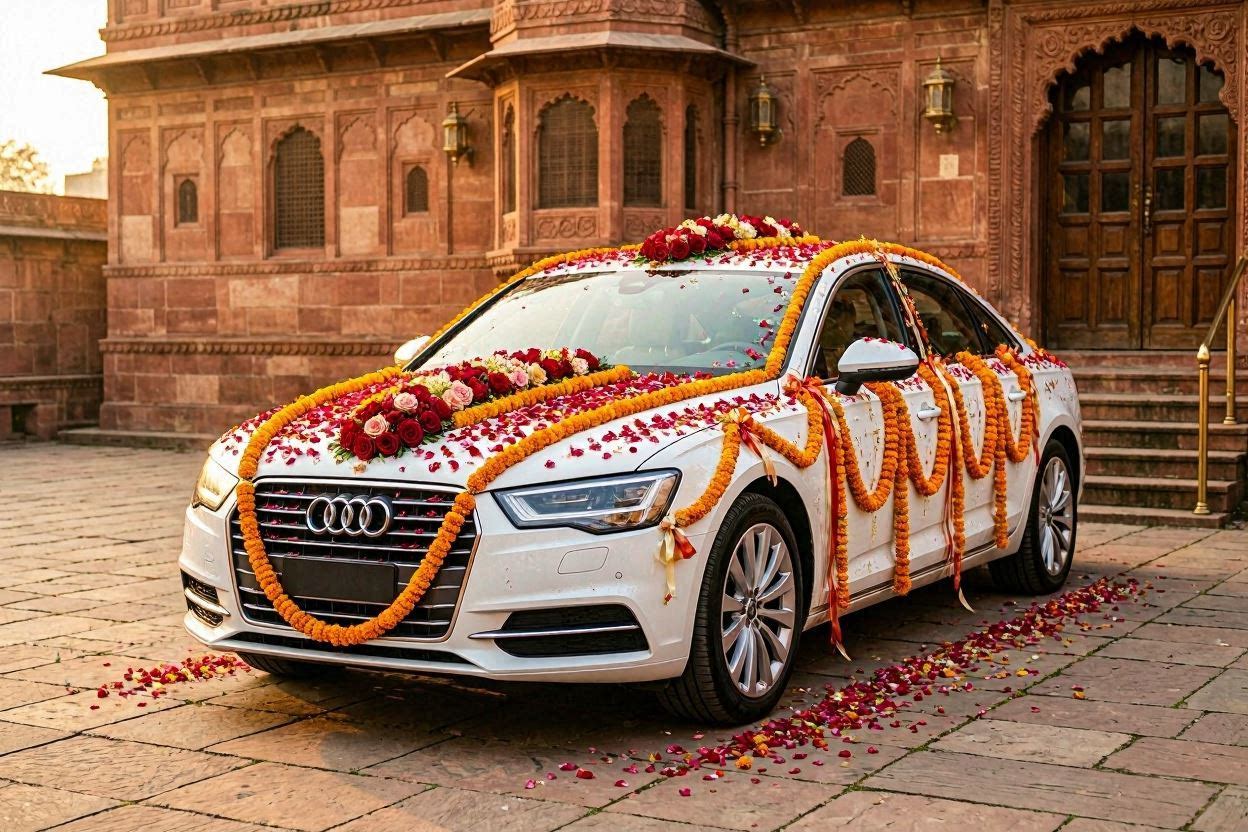
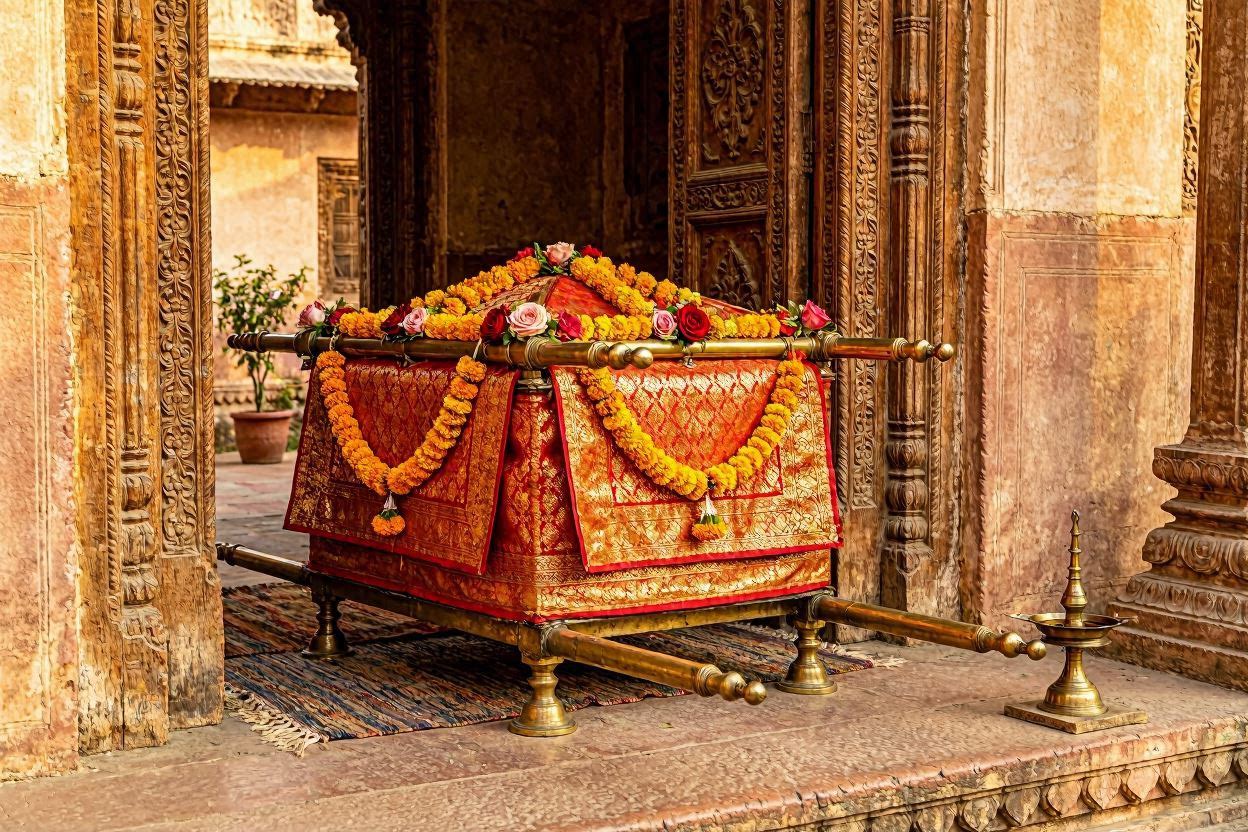
The ritual itself is brief — typically 15-20 minutes — but the emotional weight is significant. Parents bless the daughter one final time, the bride weeps openly (and often the family weeps with her), and the groom's family receives the bride at the doorway of the waiting decorated car or palanquin (doli). In coastal Odisha, the bride often carries a small kalash filled with water from her parental home, which she will pour at the threshold of her new home.
In some Odia families, the Bidaai includes a brief stop where the bride blesses younger siblings, gives them small token gifts, and then crosses the threshold. The traditional doli (palanquin) is rarely used today except in destination weddings or heritage-themed events — most Bidaai exits use the decorated couple sedan.
Modern Bidaai ceremonies are often more contained than the traditional weeping farewell, especially in urban families where the bride is moving across the same city. Still, the photographic and videographic coverage of the Bidaai consistently produces some of the most powerful images of the entire wedding.