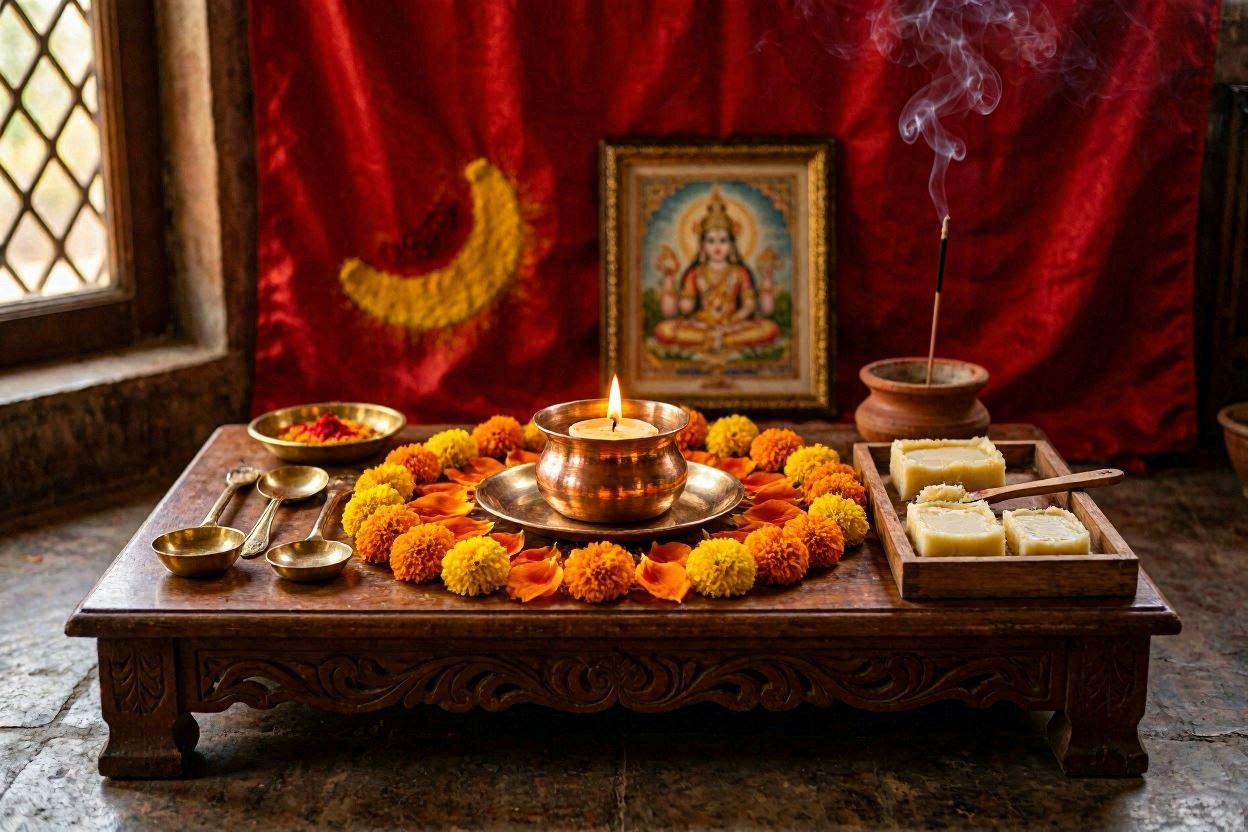
Sindoor Daan and the tying of the Mangalsutra are the two visible symbols of marriage in Hindu tradition. Immediately after Saptapadi, the groom applies a streak of red vermilion powder (sindoor) into the parting of the bride's hair. He then ties a black-and-gold beaded necklace — the mangalsutra — around her neck, completing the visible markers that signal her status as a married woman.
The sindoor at the parting (maang) and the mangalsutra are both considered protective. In traditional belief, the red vermilion represents the goddess Parvati's blessing, and the mangalsutra (literally "auspicious thread") guards the bond between the couple. Married Hindu women across India continue to wear both daily, though modern norms have softened — the mangalsutra is often worn under clothing, and sindoor is reserved for ceremonial occasions.
The design of the mangalsutra varies by region. In North India and Odisha, it typically features two cup-shaped gold pendants on a black-bead thread. In Maharashtrian tradition, it has two distinctive flat gold discs. In South India, the equivalent is the Thali — a single gold pendant on a yellow turmeric-rubbed thread or gold chain. The black beads are believed to absorb negative energy.
Modern brides often design their mangalsutras alongside the rest of their wedding jewellery, sometimes with diamond accents or contemporary pendant shapes. The sindoor box itself is increasingly an ornate gold or silver heirloom passed down through generations.