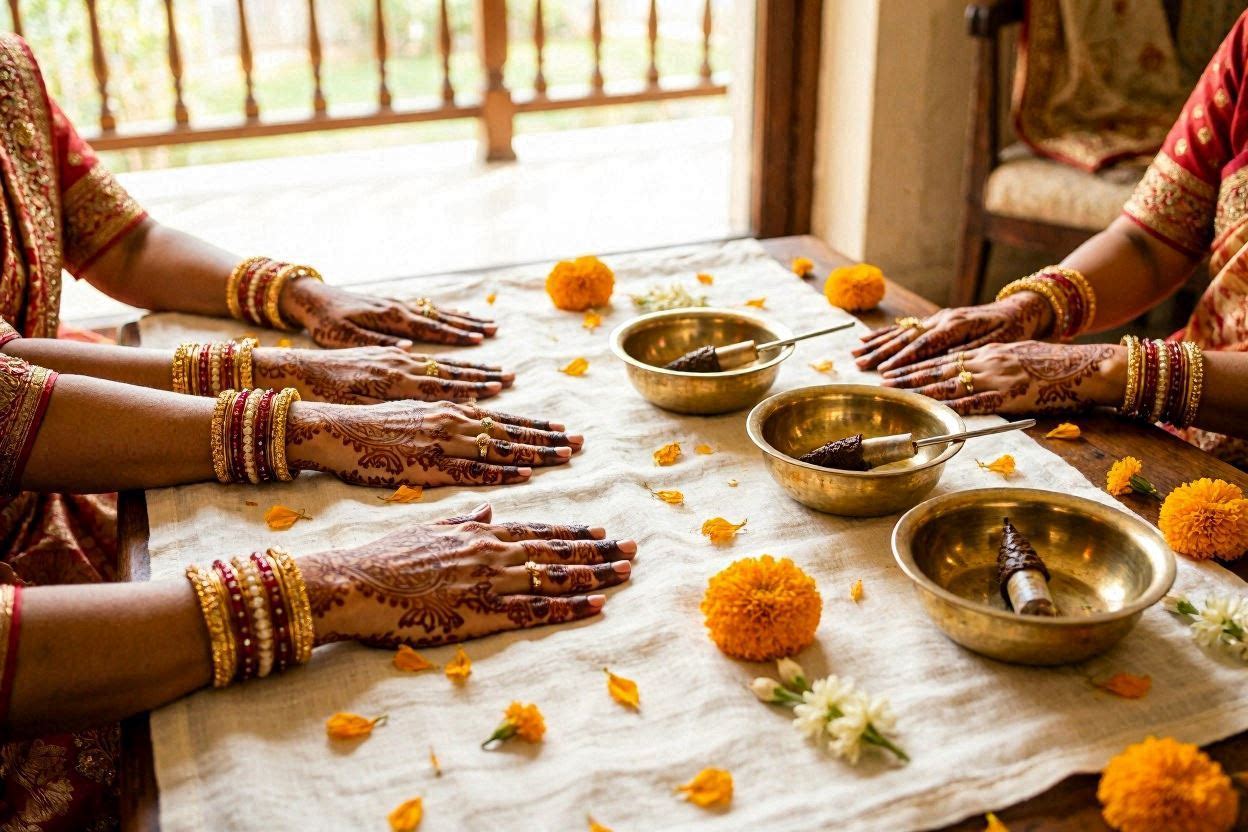
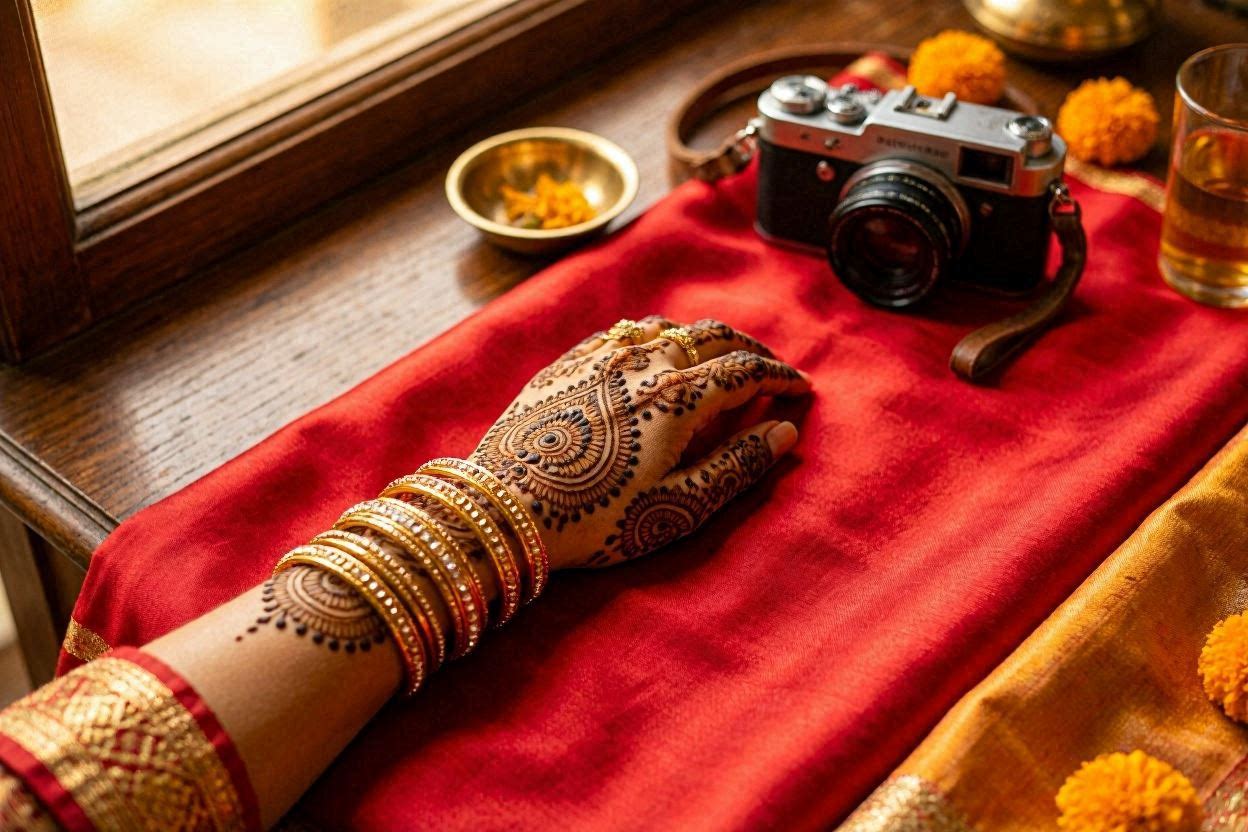
Mehndi — the application of henna designs on the bride's hands, forearms, and feet — is one of the most visually iconic pre-wedding ceremonies in India. The ritual takes 4-6 hours for a full bridal design and is often paired with music, family gathering, and traditional songs known as Suhag Geet.
The mehndi paste is made from crushed henna leaves and is believed in folk tradition to indicate the depth of the marital bond — the darker the colour develops, the deeper the love between the couple. While the saying is purely cultural, the careful application time, the intricate patterns (which often include the groom's name or initials hidden in the design), and the multi-hour gathering have made Mehndi one of the highest-investment pre-wedding events.
Modern Indian weddings now include a Family Mehndi Station alongside the bridal mehndi — 4-6 artists are hired to apply simpler designs on extended family women and friends, turning the day into a celebration. In Odia families, the Mehndi day often blends with a small Sangeet evening; in Punjabi weddings it is a major event of its own.
Bridal mehndi traditionally incorporates motifs of the mandap, the agni-kund (sacred fire), and symbols of fertility and prosperity. Modern designs blend Mughal florals with contemporary patterns and even minimal-style geometric motifs.