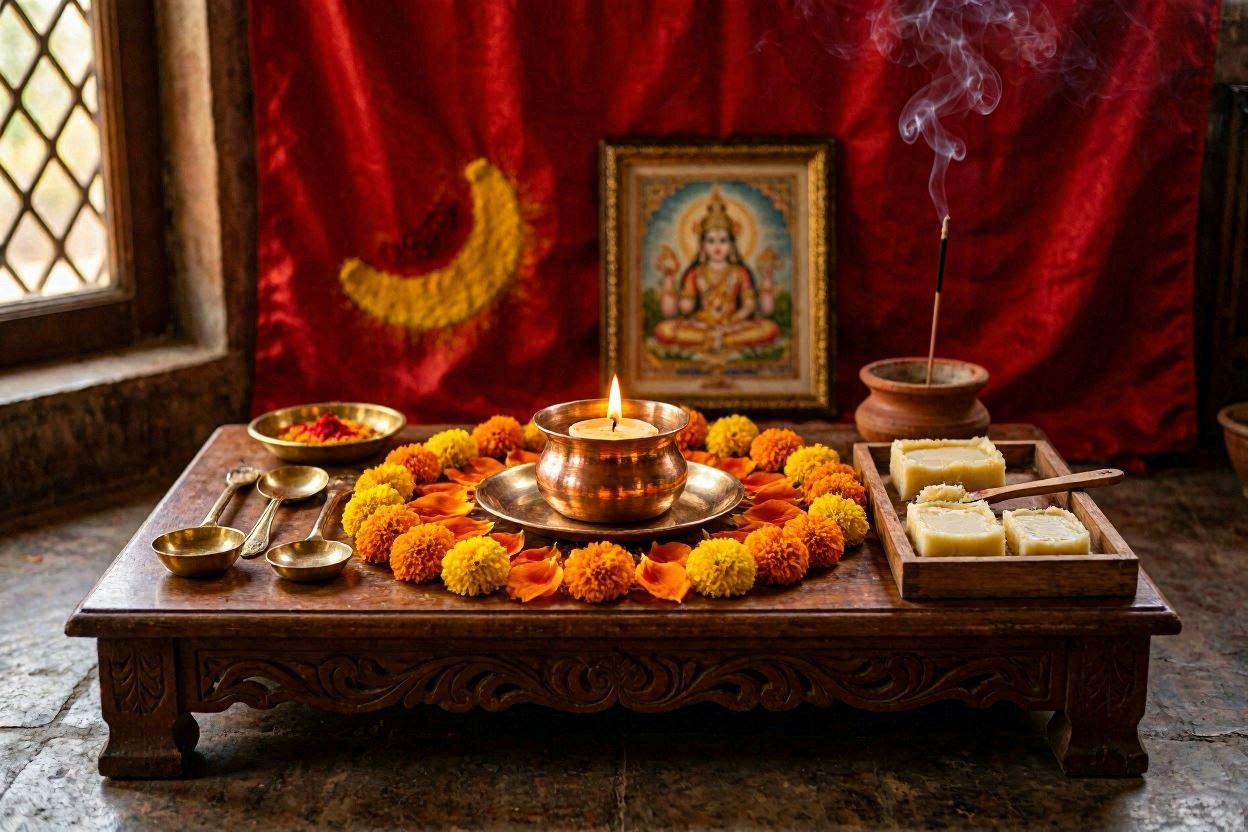
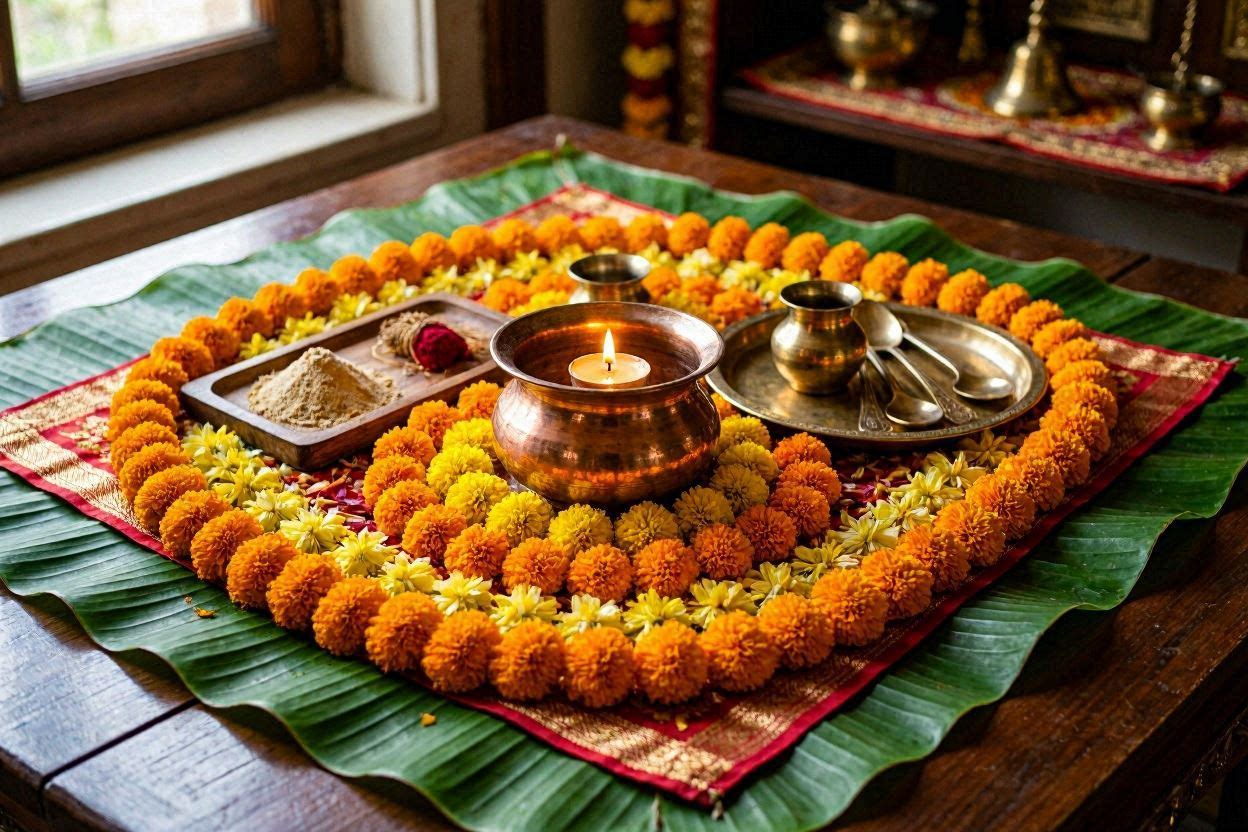
Homa — also called Havan — is the sacred fire ritual at the heart of every Hindu wedding. The couple sits in front of the agni-kund (consecrated fire pit), and the family pundit offers ghee, herbs, grains, and wood into the flames while reciting Vedic mantras. Each offering is accompanied by the chant Svaha — "I offer this, and may it be received".
The agni — fire — is regarded in the Vedas as the eternal witness. Marriage vows taken in front of the sacred fire are considered the most binding because the fire carries the offerings and the witnessed promises directly to the gods. The smoke of the Homa is believed to purify the surroundings and the couple, removing any obstacles to the marriage.
The materials used in a wedding Homa are specific: mango wood (samidha) forms the base of the fire, pure cow's ghee is poured in measured offerings, and a mixture of rice, barley, sesame seeds, and herbs is offered with each mantra. A typical wedding Homa runs 60-90 minutes and is the longest single ritual in the ceremony sequence.
In coastal Odisha, the Homa is conducted alongside the Saptapadi and Hasta Ganthi as part of the integrated Vivaha Samskara — the full Vedic marriage ceremony. In Tamil Nadu and Kerala traditions, the Homa is typically led by a senior priest with more elaborate chanting in the Sama Veda style. Modern weddings increasingly include a translator pundit who explains each mantra in Odia, English, or Hindi for guests who don't follow Sanskrit.