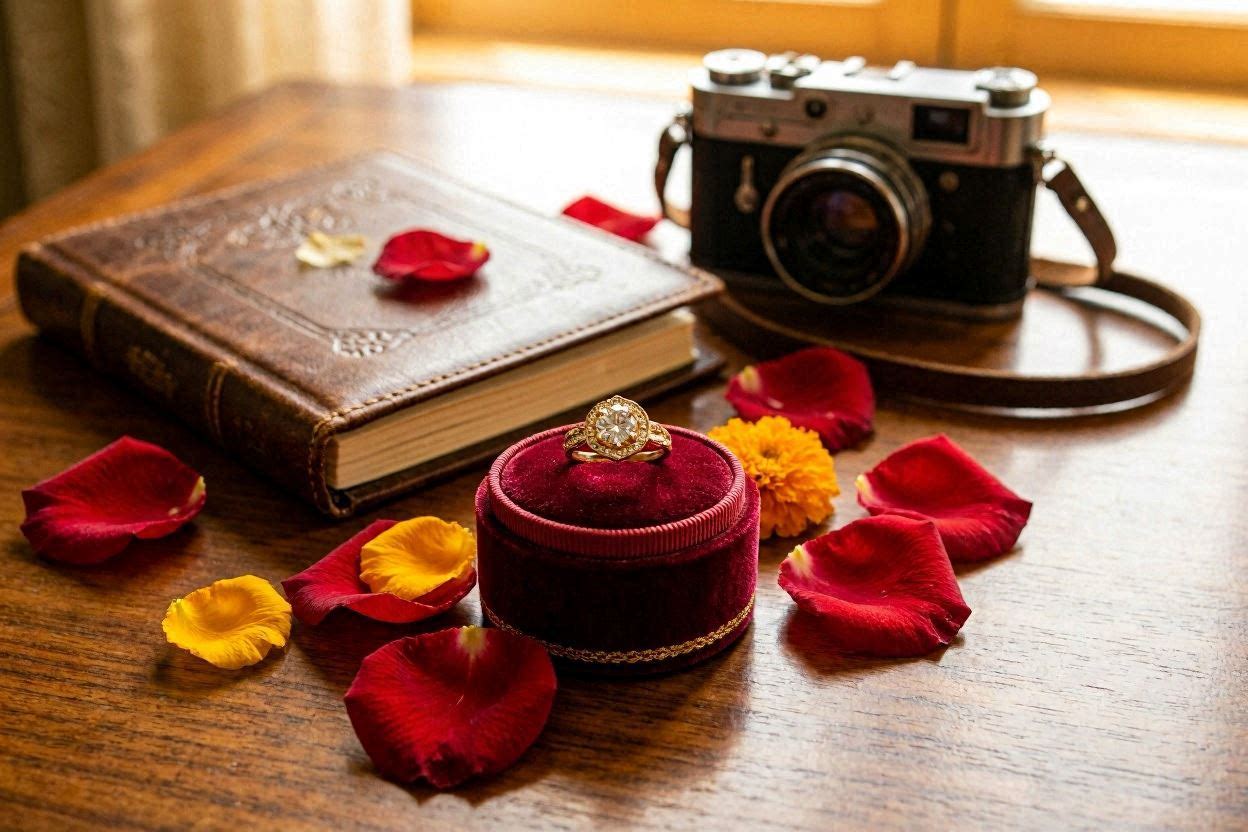
Roka is the first formal step in an Indian wedding journey — the moment where two families publicly commit to the match. The name comes from the Hindi roka, meaning "stopped", signalling that the search for either family's son or daughter is now closed.
In most Hindu traditions across India, the Roka is a small, family-only gathering held at the bride's home or a neutral venue. The groom's family arrives with sweets, a token gift, and sometimes a small ring or shagun envelope. There is no exchange of vows; this is purely a declaration of intent and the start of formal wedding planning.
In Odia families, the equivalent ceremony is called Nischayatamulya or Sagai, often performed at the bride's home with close relatives, a tilak applied to the groom's forehead, and an exchange of sweets and small gifts.
Modern Roka ceremonies are increasingly photographed and posted, marking the social-media beginning of the wedding journey. Some couples combine it with the engagement (ring exchange), while others keep them as separate events.