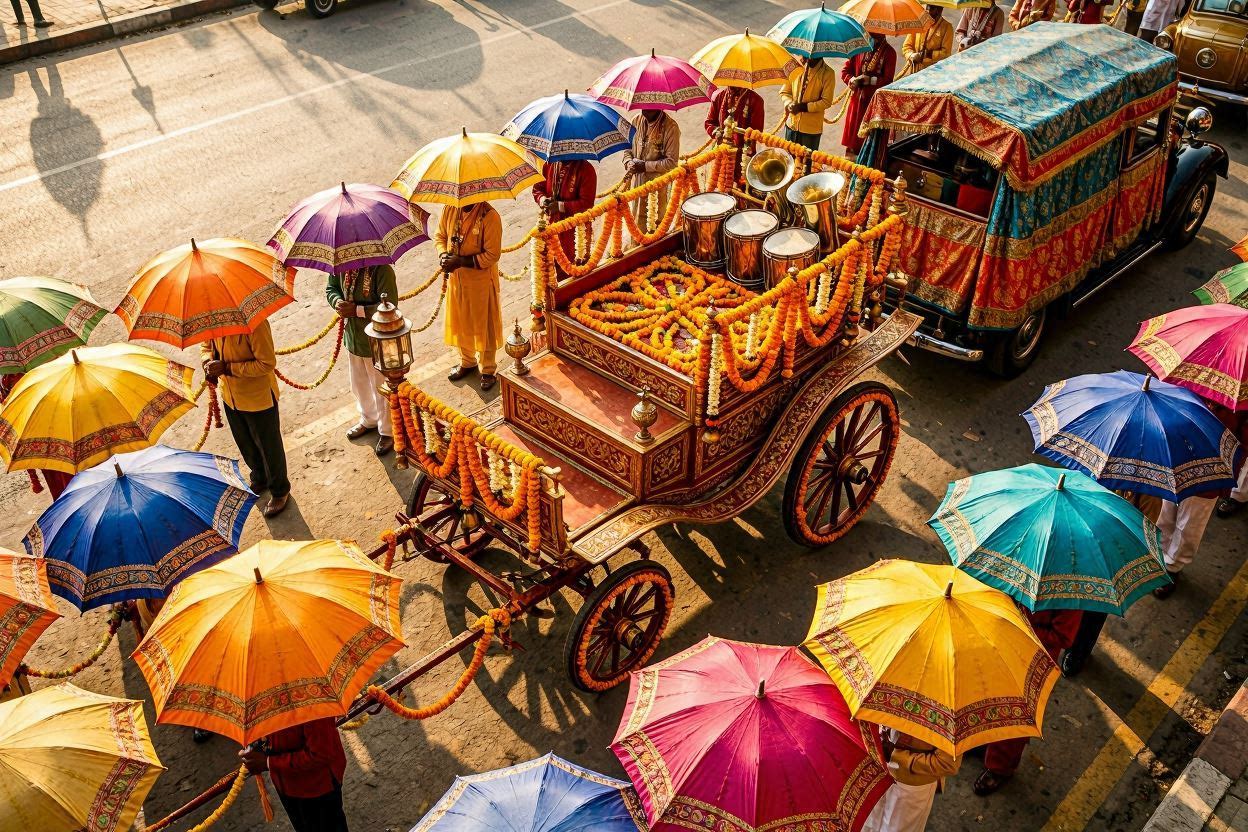
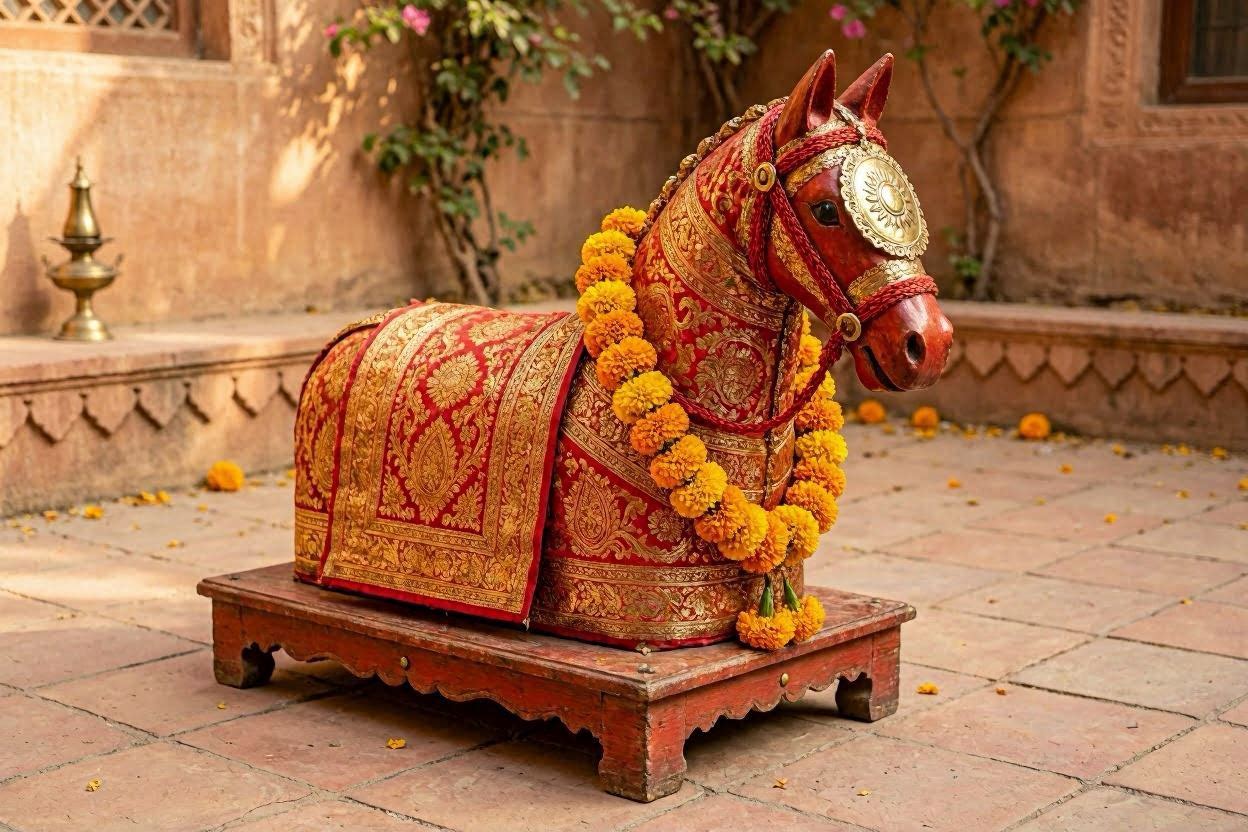
The Baraat — the groom's procession to the wedding venue — is one of the most photographed and high-energy events of any Indian wedding. The groom traditionally arrives on a decorated horse or in a luxury car, accompanied by his family, friends, a dhol troupe, and often a brass band, dancing the entire way to the venue entrance.
In rural and small-town India, the Baraat can stretch from the groom's home or pickup point all the way to the venue, lasting an hour or more. In urban settings, it is typically a shorter, more concentrated procession from the venue parking area to the entrance. The bride's family waits at the venue gate to receive the groom in a ritual called the Milni — formal greetings, garlands exchanged, and small gifts given between corresponding family members (the brothers meet the brothers, the uncles meet the uncles).
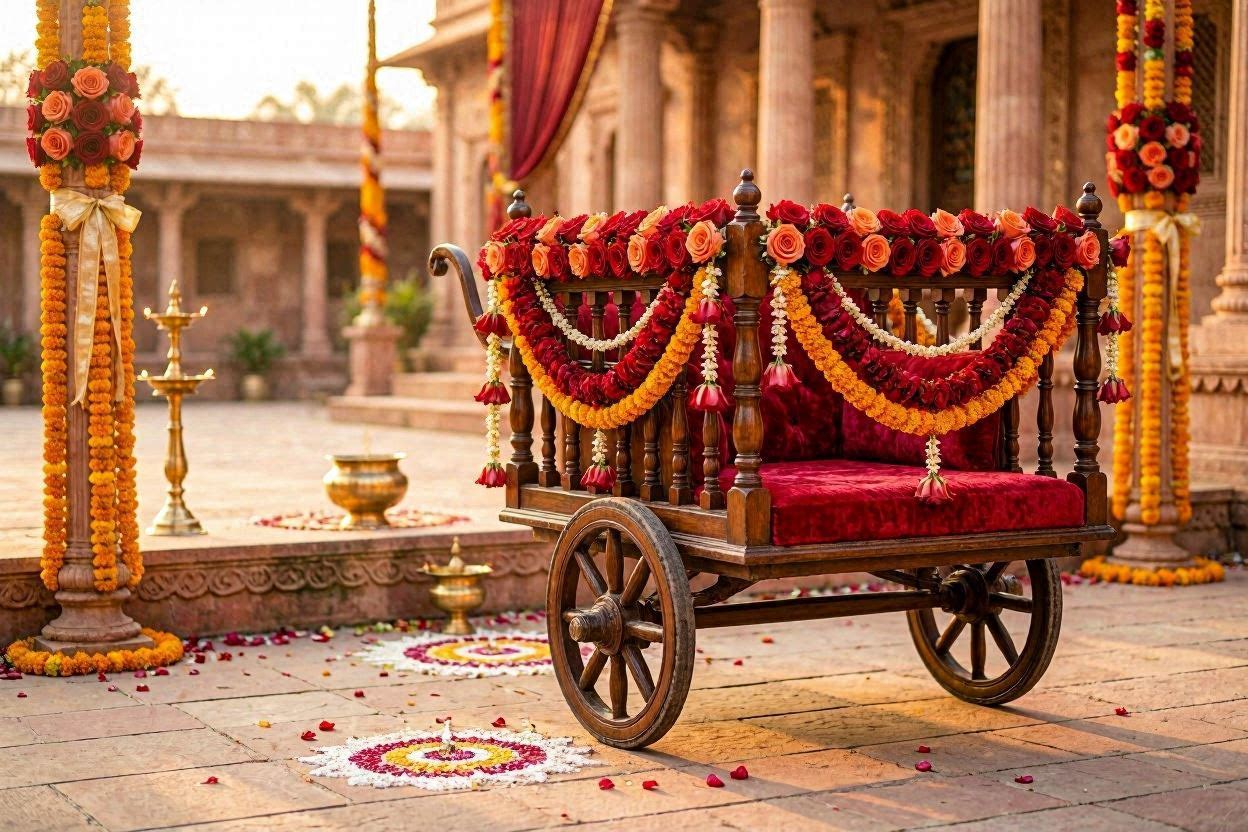
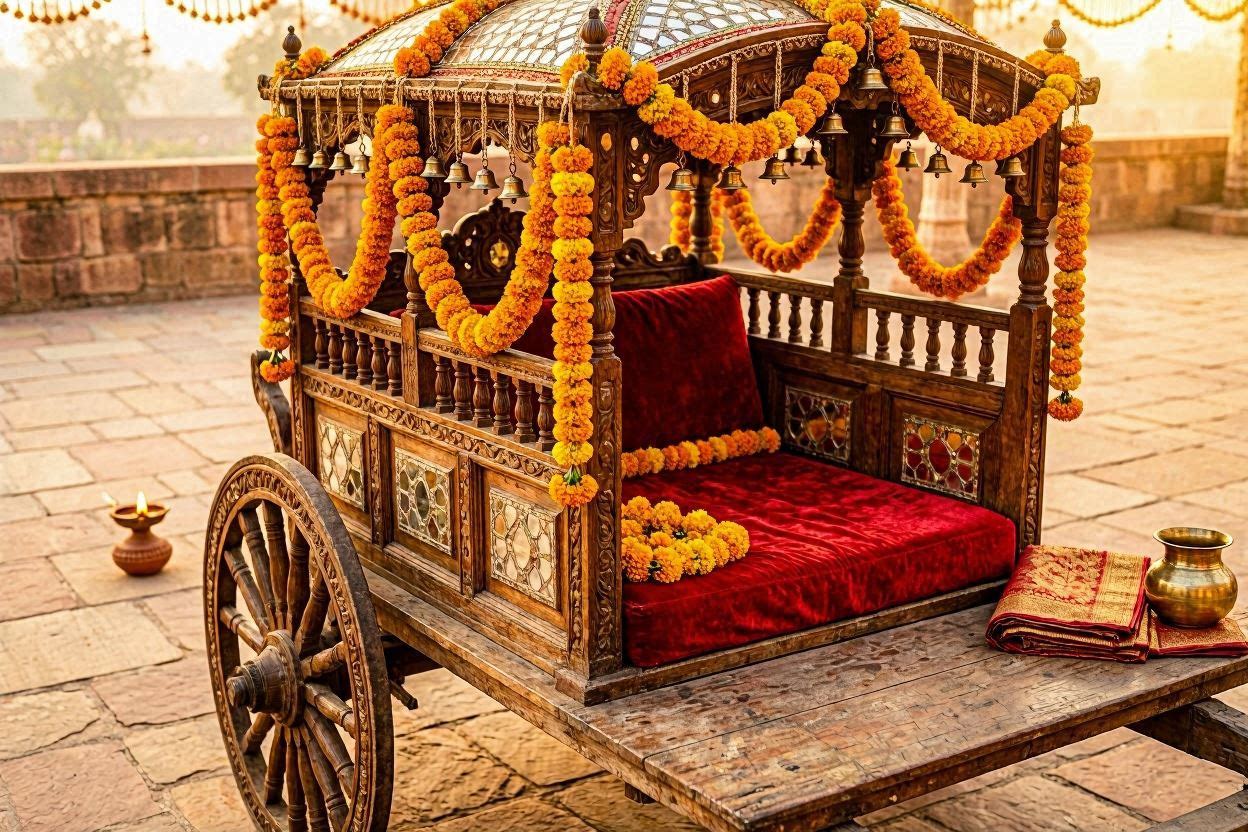
The Odia version of the Baraat is similar but often more restrained, with the groom traditionally arriving in a decorated sedan or a Sabari Rath (traditional chariot). Some coastal Odia families substitute a more local Mangalashtakam-led arrival with brass instruments instead of a Western brass band.
Animal-welfare regulations in some Indian states now restrict horse and elephant use in Baraats. Many modern Baraats opt for the Floral Chariot — a luxury car rebuilt as a Rath with floral cover — providing the dramatic visual without animal-welfare concerns.